
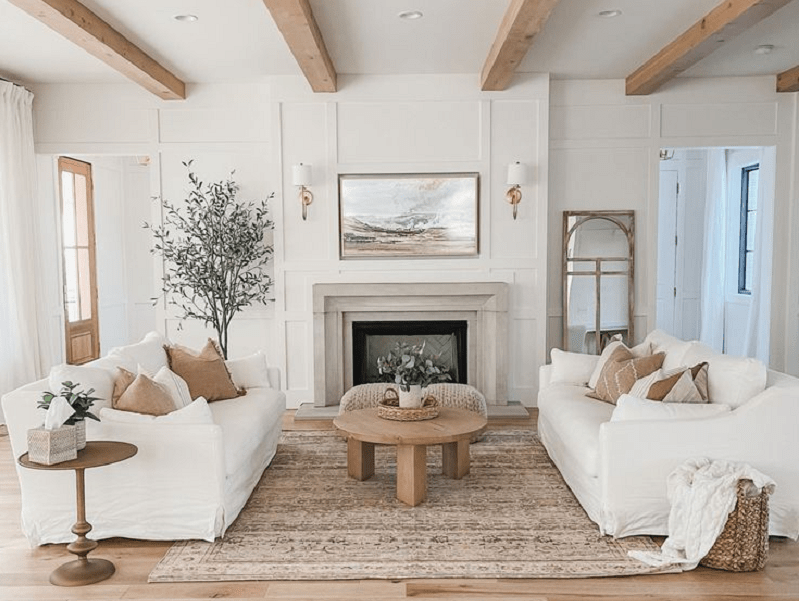
A lounge works best when people can move easily, settle in comfortably, and talk without having to shout across the room. Good conversation doesn’t happen by accident — it’s often a result of layout: distance, angles, sightlines, and flow.
Here are a few practical ways to arrange a living area so it feels welcoming and naturally brings people together.
1) Start with a focal point
Most lounges have a “natural anchor” — a fireplace, a TV, a view, or even a large artwork. The focal point gives the room structure and helps you decide where seating should face.
Tip:
Choose one main focal point. If you have both a TV and a fireplace, decide which one is primary (and treat the other as secondary) so the room doesn’t feel pulled in two directions.
2) Create a conversation zone
A good lounge layout usually forms a circle or semi-circle, so everyone feels included. Seating should be close enough that conversation feels effortless, but not cramped.
Tip:
Keep a central surface (coffee table or ottoman) within easy reach for drinks, books, and shared items — it helps the group feel connected.
3) Balance open space and comfort
A room can be cosy without being tight. The key is clear pathways around seating zones so the room flows naturally.
Tip:
Plan walkways first, then place seating. If movement feels awkward, the room won’t be used the way you intend.
4) Use furniture that matches the room’s proportions
Oversized furniture can block sightlines and make a lounge feel heavy. Too-small pieces can feel scattered and disconnected. Aim for scale that supports comfort and flow.
Tip:
Avoid pushing everything against the walls. Pulling seating in (even slightly) makes the space feel more intentional and helps conversation happen more naturally.
5) Protect sightlines for easy communication
People connect when they can see each other properly. Layouts that point chairs away from the group or create “isolated islands” tend to limit interaction.
Tip:
Angle chairs toward the centre and mix seating types — a sofa plus a pair of armchairs often creates better conversation than one big sofa alone.
6) Add the finishing details that make people linger
Once the layout works, texture and lighting do the rest. Soft furnishings make the room feel warmer, while layered lighting keeps the mood relaxed.
Tip:
A rug that anchors the seating zone, cushions/throws for softness, and gentle lighting (table lamps or floor lamps) will make the space feel inviting without needing a full redesign.
A well-arranged lounge encourages communication and comfort. With a little thought into layout, your living area can become the most used — and most loved — space in the home.
Need help planning a layout?
Send through your room dimensions (or a quick photo) and the main function of the space, and we’ll help you think through a simple furniture plan that supports flow and conversation.