
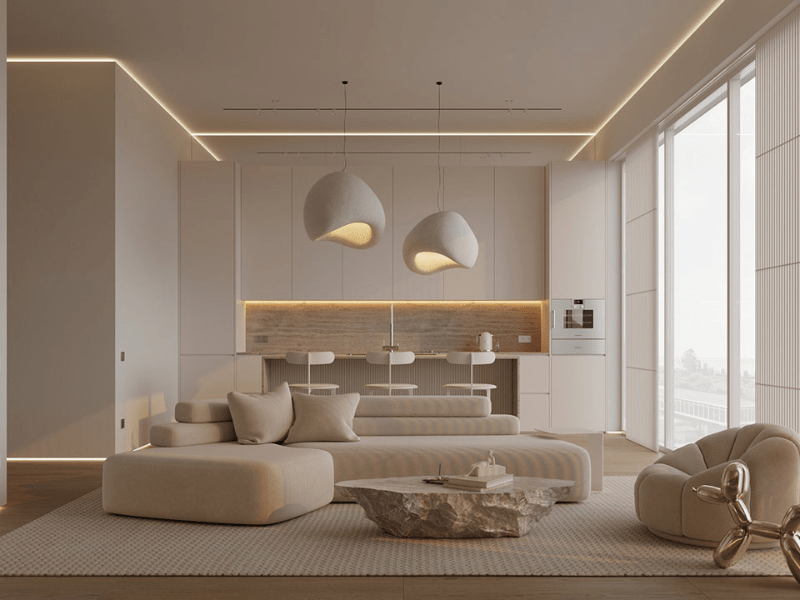
Lighting has shifted from being purely practical to being one of the easiest ways to change how a home feels. Many South African homes are moving away from a single harsh overhead light and using layered lighting instead — softer, warmer, and far more adaptable.
If you want your space to feel calmer, more inviting, or simply “finished,” ambient lighting is a good place to start
What is ambient lighting?
Ambient lighting is the overall, comfortable glow in a room — the light that lets you move around easily without feeling like you’re under a spotlight.
The easiest way to get it right is to think in layers:
- Ambient lighting: soft, general illumination (wall lights, LED strips, shaded pendants, cove lighting)
- Task lighting: focused light for doing things (reading lamps, desk lamps, under-cabinet kitchen lighting)
- Accent lighting: light that highlights (artwork, shelves, textured walls, plants)
A single ceiling light can’t do all three well — that’s why layering works.
Key trends in ambient lighting (and how to use them)
1) Smart and adjustable lighting
The biggest upgrade isn’t always a new fitting — it’s control. Dimmable bulbs and smart systems let you shift the mood easily.
Try this as a starting point:
- Warm light in living areas and bedrooms
- Neutral to cooler light for kitchens and workspaces
- Dimmers wherever you entertain or unwind
Even a simple dimmer can make a room feel more expensive.
2) Indirect, softer light
Hidden or diffused light is trending because it reduces glare and makes a room feel calmer.
Options that work well:
- Cove lighting for a gentle wash on ceilings
- LED strips behind a headboard, TV unit, or shelving for a “floating” effect
- Wall sconces and floor lamps to create soft corners and reduce harsh shadows
A good rule: if the light source is visible and bright, you’ll feel it. If the light is bounced or shaded, you’ll relax into it.
3) Nature-inspired materials and effects
Natural textures are increasingly used in lighting because they soften a space visually as well as physically.
Look for:
- Wood, ceramic, woven or rattan shades for warmth and texture
- Lighting that works well with plants and natural materials
- Daylight-inspired lighting in spaces where you spend long hours (especially work areas)
This is less about “trend” and more about making a room feel grounded.
4) Statement fittings that feel intentional
A statement light can anchor a room the way a dining table or artwork does. The key is scale and placement.
Good places for a feature light:
- over a dining table
- in an entryway
- above a kitchen island
- in a double-volume space
If you’re unsure: choose a simple, well-shaped fitting and let the material do the talking.
5) Outdoor ambient lighting (because we live outside)
South African homes often have patios, verandahs, or garden areas that deserve the same attention as interiors.
Easy wins:
- Solar lanterns or fairy lights for soft evening glow
- Wall sconces to add depth and highlight textures
- Pathway lighting for safety and atmosphere
Outdoor lighting feels best when it’s low, warm, and layered — not stadium-bright.
A simple checklist for better lighting
If you want one quick framework:
- Aim for 3 light sources per room (not all ceiling-based)
- Choose warm bulbs where you relax
- Add dimmers if possible
- Use shades or indirect light to avoid glare
- Put light where you want the room to feel “alive” (corners, shelves, artwork)
Want help choosing the right lighting for your space?
If you share the room type, rough dimensions, and one photo (optional), we can help you decide where to place lighting and what style will suit the space.