
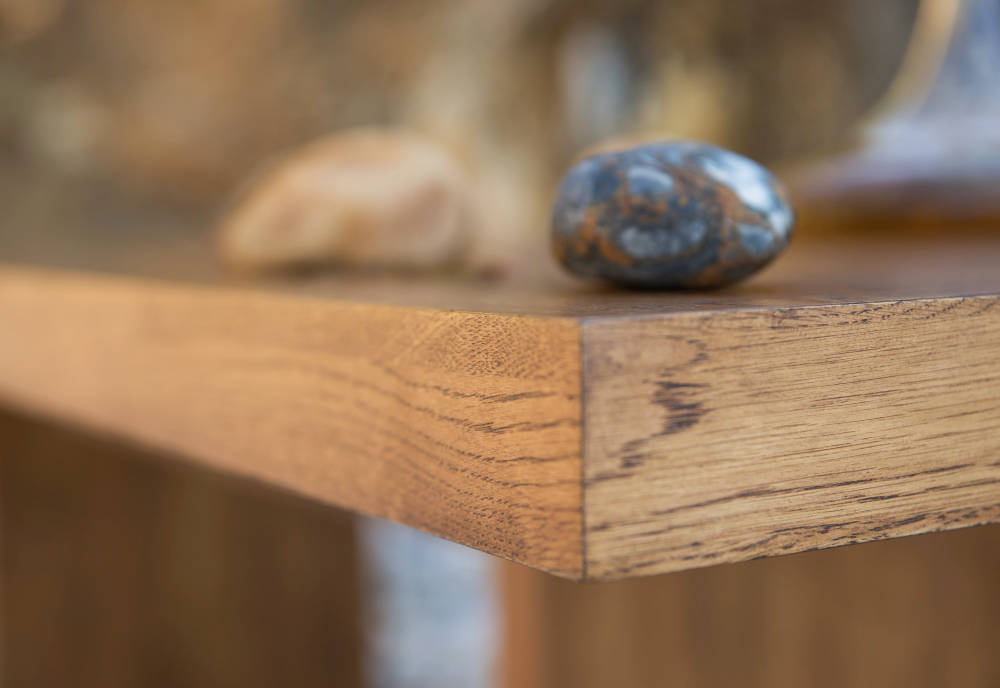
When you choose solid wooden furniture, you’re not just buying a product — you’re investing in a piece of nature, craftsmanship, and lasting beauty. There’s something timeless about real wood that synthetic or mass-produced alternatives can’t replicate.
Whether you’re drawn to the deep tones of Blackwood, the warmth of Japanese Maple and Camphor, or the character of Oak, each piece carries its own story. Wood is a natural material with unique grain, colour, and texture — no two pieces are ever the same.
Understanding Wood
The Basics
There are two broad categories of timber used in furniture:
Hardwoods
Dense, durable woods such as Oak, Teak, Japanese Maple, Camphor, Ash, and Blackwood. Hardwoods are ideal for furniture that needs to last and handle daily use.
Softwoods
Timbers like Pine, Rubberwood, and Acacia. These are often lighter and more affordable, but typically not as durable as hardwoods over the long term.
A few popular woods (and why people love them)
- Oak: strong, classic, and timeless
- Teak: naturally water-resistant and rich in oils — suited to humid environments
- Japanese Maple & Camphor: beautiful grain, stable, and naturally resilient
- Blackwood: dark, refined, and prized for both strength and elegance
Every species has its own grain pattern, texture, and natural imperfections — which is exactly what makes solid wood furniture feel personal and distinctive.
Why Choose Solid Wooden Furniture?
Solid wood furniture is more than just beautiful — it’s made to last.
- Durability: can last decades (and often generations) with proper care
- Timeless appeal: wood develops a richer patina and character over time
- Sustainability: responsibly sourced timber is renewable and a more eco-conscious choice
- Repairable: most scratches and dents can be sanded out or refinished, rather than replaced
How to Spot High-Quality Furniture
Small details usually reveal the level of craftsmanship. Look for:
- Joinery: traditional techniques like dovetail, mortise and tenon, or dowels, rather than only nails or staples
- Weight: solid wood pieces generally feel substantial and stable
- Grain matching: grain patterns flow naturally across surfaces, showing careful selection and alignment
- Finish: smooth, consistent, and well-prepared — no rough edges or blotchy patches
- Allowance for wood movement: quality designs account for seasonal expansion and contraction due to humidity and temperature changes
How to Care for Solid Wooden Furniture
Wood is resilient, but it benefits from consistent, sensible care.
Do’s
- Dust regularly with a soft, dry cloth
- Use coasters, placemats, and trivets to protect from water and heat
- Keep furniture out of harsh, direct sunlight to reduce fading or warping
- Maintain the finish with appropriate oils or wood-safe products (sparingly and as recommended)
Don’ts
- Don’t use harsh cleaners or silicone-based sprays
- Don’t place furniture directly next to heaters or air-conditioning vents
- Don’t leave spills — wipe them up promptly and dry the surface
With a little care, solid wood furniture will continue to bring warmth, character, and charm to your home for years to come.